Trading
A Beginner's Guide to Reading Candlestick Charts
Learn how to read candlestick charts, spot key patterns, and use them to make smarter trading decisions.
By Tasmin Angelina Houssein , Founder & Creator , , 2 min read
On this page
What Are Candlestick Charts?
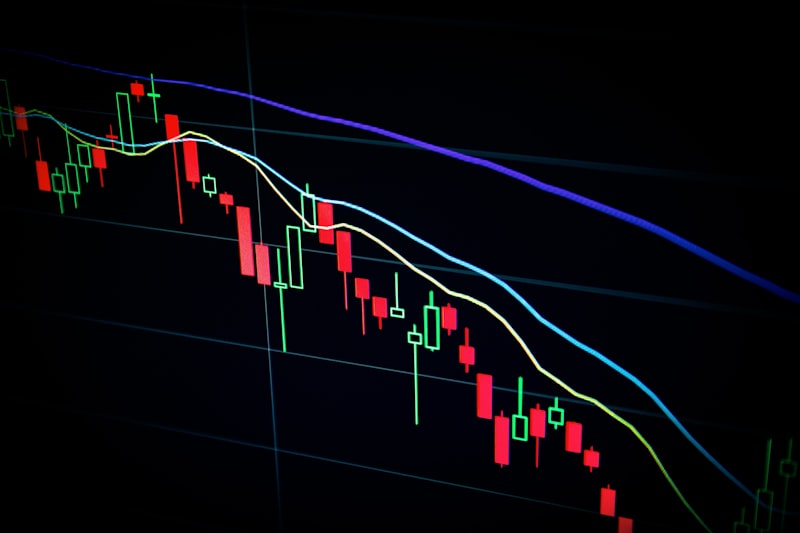
Candlestick charts are the most popular way to visualise price movements in financial markets. Originally developed by Japanese rice traders in the 18th century, they pack four data points into a single visual element.
Anatomy of a Candlestick
Each candlestick shows:
- Open — the price at the start of the period
- Close — the price at the end of the period
- High — the highest price reached
- Low — the lowest price reached
A green (bullish) candle means the close was higher than the open. A red (bearish) candle means the close was lower.
Key Patterns to Know
1. Doji
A doji forms when the open and close are nearly identical, creating a cross shape. It signals indecision in the market.
2. Hammer
A hammer has a small body at the top with a long lower wick. It appears at the bottom of downtrends and suggests a potential reversal.
3. Engulfing Pattern
When a large candle completely engulfs the previous smaller candle, it signals a strong shift in momentum.
“Candlestick patterns don’t predict the future — they help you read the present more clearly.”
Putting It Into Practice
Start by observing daily charts of major indices or currency pairs. Look for patterns forming at key support and resistance levels. Combine candlestick analysis with volume data for stronger signals.
Remember: no single pattern is reliable on its own. Context always matters.

Founder & Creator
That one student who couldn't stop asking 'but why?' in economics class — and turned it into a whole platform. Econopedia 101 is where curiosity meets financial literacy, built to make money, business, and economics feel less intimidating and more empowering.